
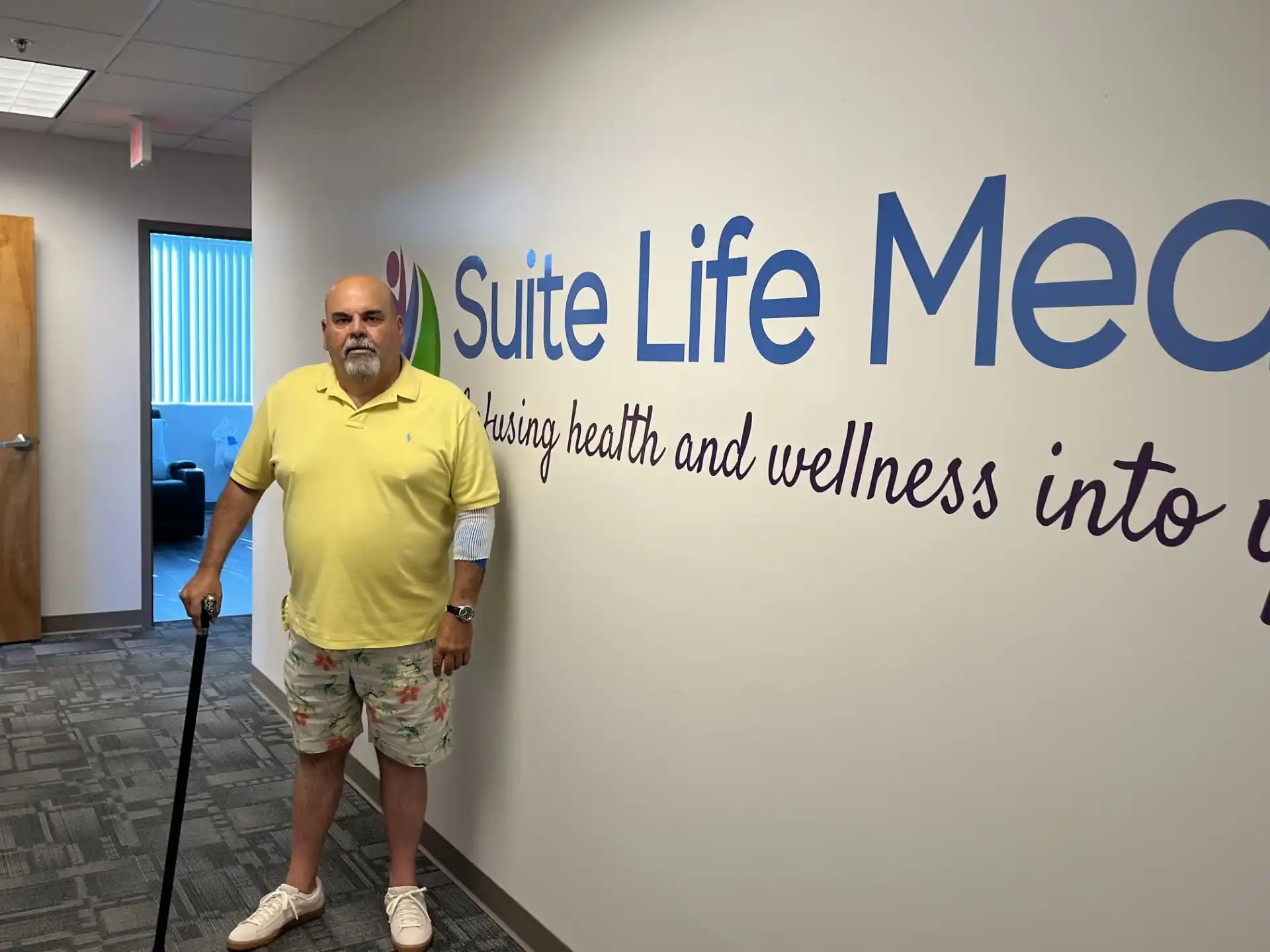
Every eight weeks, Sal walks through the doors at Suite Life with his wife Chris right beside him. It has been that way since 2024, when Sal's rheumatologist first introduced him to outpatient IVIG infusion for myositis. For most patients, myositis is a word they have never heard, right up until the day it becomes part of their life. Here is a closer look at what it is, how it is treated, and what Sal and Chris's experience can tell us about living well with it.
What Is Myositis?
Myositis is a rare autoimmune condition in which the immune system mistakenly attacks healthy muscle tissue, causing chronic inflammation. Over time, that inflammation leads to muscle weakness that can worsen, and sometimes muscle pain as well. The weakness most often starts in the muscles closest to the trunk, such as the hips, thighs, shoulders, and upper arms, though it can also affect the skin, joints, lungs, and esophagus.
Common Types of Myositis
- Polymyositis, which primarily affects the muscles
- Dermatomyositis, which affects the muscles and skin
- Inclusion body myositis, which usually affects adults over 50 and tends to progress more slowly, often starting in the wrists, fingers, or feet
- Juvenile myositis, which affects children and teens
Whatever form it takes, the day-to-day reality is often similar: ongoing care, and for many patients, ongoing infusions.
What Causes It, and How Is It Treated?
The exact cause of myositis is not fully understood, but it is driven by an abnormal immune response. Treatment focuses on calming that immune response, reducing inflammation, and preserving muscle strength and function. A rheumatologist may recommend one or a combination of the following:
- Corticosteroids to reduce inflammation and pain
- Immunosuppressant medications to help control the autoimmune attack and reduce reliance on steroids
- Physical therapy to maintain strength, flexibility, and range of motion
- Intravenous immunoglobulin (IVIG), often used for dermatomyositis and cases that have not responded fully to other treatments
For Sal, his rheumatologist recommended IVIG, a treatment that would soon become a regular part of his life. IVIG works by delivering healthy, donor-derived antibodies into the bloodstream to help regulate an overactive immune system, reducing inflammation and protecting muscle tissue from further damage. It is typically given as an initial series over several days, followed by maintenance infusions on a regular schedule. That maintenance schedule is the same one Sal has followed every eight weeks since 2024.
Why Outpatient Infusion Makes a Difference
For patients managing a chronic condition like myositis, infusion appointments are not a one-time event. They are a recurring part of life, sometimes for months or years. That is why where and how those infusions happen matters just as much as the treatment itself.
Every eight weeks, Sal and Chris walk through our doors, and every time, our team is reminded why we do this work. From day one, they have told us they felt cared for, respected, and welcomed like family. Over time, they have come to appreciate the rhythm of it: a private suite for the long infusion days, an office close to home, and a team that knows them by name and by story.
Living Well With Myositis
A myositis diagnosis changes a routine, but it does not have to take over a life. With the right treatment plan and the right infusion partner, patients like Sal continue showing up for their families, their friends, and the things they love. Nothing brings us more joy than making that experience easier for patients.
Ask Sal what he thinks of it, and his answer is simple: “You can’t get better than Suite Life.” Ask our team what they look forward to at each visit, and more than one person will mention Chris’ incredible cooking.
If you or someone you know has been referred for outpatient IVIG infusion, our team at Suite Life is here to make that next step feel a little less overwhelming, and a lot more like home.
